


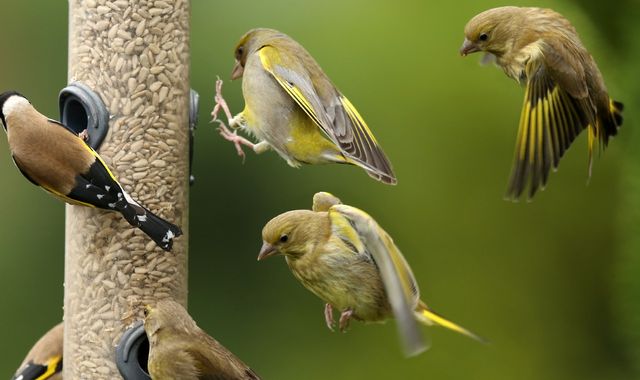
Bird lovers need to take care of how and when they feed them to avoid spreading a deadly disease, the RSPB has said.
The charity warned on Friday that its annual Big Garden Birdwatch study showed a 65% fall in Britain's greenfinch population over the past three decades.
It's blaming trichomonosis, a highly contagious disease that spreads where birds gather in large numbers, such as at bird feeders.
Birds should be fed seasonally and safely, the RSPB said, with small amounts of mealworms, fatballs or suet while avoiding seeds or peanuts between May and October.
The disease is more likely to spread in summer and autumn, which is "also when there are more natural foods available to birds, such as seeds and insects".
For the rest of the year, a full range of bird foods, including seeds and peanuts, can be offered.
Keeping bird feeders clean will help keep birds healthy, as they can become hotspots for disease.
The charity recommends cleaning feeders and water baths at least once a week and to "clean away any old food or droppings from beneath feeders".
Moving bird feeders every week "will help to prevent any build-up of potentially contaminated debris underneath".
Where feeders are placed is important, too, as avoiding roosting spots, such as under trees, "will help to avoid contamination through droppings".
The type of feeder can make a difference, as contaminated food can build up on those with flat surfaces, such as bird tables, window feeders and feeders with trays.
Avoid overfeeding birds, making sure food is eaten within a couple of days and keep it as dry as possible, as "damp food allows disease to survive and spread".
Read more from Sky News:
Why did some thought this picture was AI
The battle for the Arctic
Multimillion-pound defence plan 'a fiasco'
Put fresh tap water in bird baths daily and help birds find their own food by growing bird-friendly plants, such as sunflowers, teasels and ivy.
More than 650,000 people took part in the 2026 Big Garden Birdwatch, counting the birds that landed in their garden or local park for one hour in January.
Trichomonosis is known as 'canker' when seen in pigeons and doves, and as 'frounce' when seen in birds of prey, the British Trust for Ornithology said on its website.
Caused by the protozoan parasite Trichomonas gallinae, it has been known as a disease of cage birds for some time and was first seen in the UK in 2005.

(c) Sky News 2026: Feed the birds... just not in summer
 Multimillion-pound push to transform 'broken' UK military is a 'fiasco'
 Three Russian submarines targeted UK cables, defence secretary says
 Farage 'leading culture war' with Kanye comments, Harriet Harman says
 More specialist police patrols for vulnerable communities after high-profile attacks
 Man arrested after four people died trying to cross English Channel
 Car wash owners jailed for helping smuggle more than 400 people into Europe
 Mark Kleinman blog | Domino's Pizza faces deep panning from investors over executive pay plans
 More than half of the UK sees US as a negative force because of the Iran war, poll finds